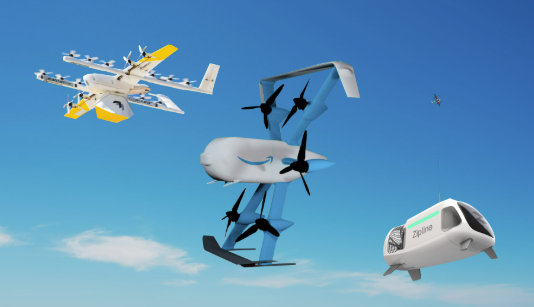
Delivery drones merge lightweight airframes with electric propulsion and autonomous control. Core tech focuses on propulsion optimization, sensor fusion, and real-time error correction, supported by modular batteries and strict safety protocols. Navigation and scheduling optimize routes by demand, wind, and battery margins, enabling rapid reallocation of assets. Benefits appear in faster last-mile delivery and expanded rural access, yet regulatory, airspace, and public acceptance barriers persist, leaving questions about practical deployment and governance unresolved. The next step weighs these trade-offs against real-world outcomes.
How Delivery Drones Work: Core Tech and Flight Safety
Delivery drones integrate lightweight airframes, electric propulsion, and autonomous navigation to perform last-mile deliveries with minimal human intervention. The system centers on core tech: propulsion optimization, sensor fusion, and real-time error correction. Aerodynamics efficiency shapes endurance, stability, and payload consistency, while modular battery swapping reduces downtime. Safety protocols encompass fail-safes, geofencing, and redundant comms to sustain uninterrupted autonomous operation.
Navigation and Scheduling: Getting Packages From a to You
Navigation and scheduling orchestrate the movement of packages from drone hubs to end users by aligning route planning, task assignment, and airspace constraints in real time. The system analyzes demand, wind, and battery margins to generate feasible, priority-aware flight plans. It enables rapid reallocation, parallel deliveries, and prompt ideas, not naval drones, fostering agile, freedom-driven logistics without excessive overhead.
Benefits and Barriers: What Drones Deliver and What Holds Them Back
Drones offer rapid, on-demand delivery of time-sensitive goods, expanding access to remote areas and enabling higher throughput for urban logistics, yet their impact hinges on cost, reliability, and regulatory clarity.
This analysis maps benefits versus barriers in practice, noting faster delivery logistics and last‑mile efficiency, while airspace management, safety, and public acceptance constrain scalability within urban airspace.
The Road Ahead: Regulations, Privacy, and Real-World Use Cases
Regulatory clarity, privacy safeguards, and real-world deployments will shape how delivery drones mature from experimental pilots to routine infrastructure.
The road ahead emphasizes balancing innovation with accountability, as operators navigate evolving airspace zoning rules, risk models, and data governance.
Privacy concerns intersect with transparency and consent, while scalable deployments test interoperability, security, and public trust in enabling efficient, autonomous last-mile logistics.
Frequently Asked Questions
How Accurate Are Drone Delivery ETAS in Real-World Conditions?
Delivery accuracy in the real world varies; flight reliability hinges on weather, airspace constraints, and system redundancy. Real world factors like battery performance and routing efficiency influence ETA, with drones often achieving moderate precision under controlled conditions.
Can Drones Operate in Extreme Weather and at Night?
Drones weather risks loom, yet some platforms enable night operations with sensors, redundancy, and geofencing. In extreme conditions, performance degrades; pilots weigh safety margins, regulatory limits, and battery endurance before deployment. Outcomes hinge on hardware resilience and mission-critical analytics.
See also: Decentralized Search Engines Explained
What Happens if a Drone Loses GPS or Loses Communication?
If a drone loses GPS or comms, its autonomy engages contingency protocols, defaulting to hover or return-to-home, then resume-or-safe-landing once signal is restored. Inherent drone autonomy limits emphasize fail-safes and operational resilience.
Are Deliveries Safe for Delicate or Oversized Items?
Deliveries for delicate items may be feasible with advanced stabilization and gentler grippers, though risks persist; oversized item logistics require scalable payload handling, precise routing, and robust safety margins. Overall, safety hinges on specialized hardware and rigorous testing for each scenario.
How Do Drone Delivery Programs Handle Air Traffic Conflicts?
Like synchronized dancers, drone programs handle airspace coordination with geofencing and predefined corridors, ensuring safe coexistence; collision avoidance systems monitor trajectories and resolve conflicts in real time, preserving freedom while maintaining orderly, compliant air traffic management.
Conclusion
Delivery drones, pushed by rapid propulsion, sensor fusion, and agile routing, epitomize ultra-fast logistics. In a world of on-demand skies, efficiency compounds as batteries evolve and routes parallelize, shrinking delivery windows to mere heartbeats. Yet the very speed that promises convenience also magnifies safety and privacy questions, demanding rigorous standards. If navigation and safety keep pace with ambition, drones will redefine last-mile reach; if not, hype evaporates. The future hinges on disciplined tech, transparent policy, and real-world testing.